At-Home Hair Extension Tips
ulhmts on 29 January, 2026 | No Comments
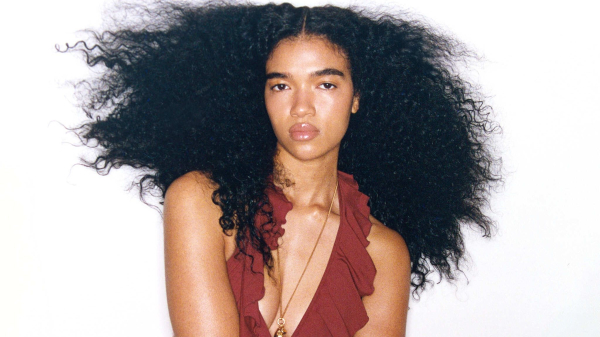
 Andy JacksonSave this storySave this story
If I had a nickel for every time I recommended at-home hair extensions to a friend, I’d be retired and living in Capri. But I’m often met with concerns that oscillate between “I could never put them on myself” and “I don’t even know where to begin”—both absolutely valid woes when it comes to self-installing wefts.
In the past a bundle of extensions could conjure images of the exposed, holding-on-by-a-strand mishaps of the early aughts. Fortunately, though, extension technology has come a long way and installing them yourself is now easier than ever.
Ahead, Justine Marjan, hairstylist and Bellami Hair ambassador in Los Angeles and New York City, shares her tips for perfecting at-home extensions.
Know your hair-extension options
First, let’s take a quick inventory of the available extensions out there, both at home and in a salon. Clip-in extensions are the easiest for the at-home curious, and they offer the most room for low-commitment play with placement and styling. The name says it all: Just clip them in and go.
Next, we advance to tape-in extensions, sew-ins, and keratin bonds, which offer a range of options in terms of wear time, commitment, and application difficulty. For these three types of extensions, Marjan recommends consulting a professional who can assess the best placement based on your hair’s needs, texture, and integrity. Keratin bonds, for example, are the longest-lasting (three to five months) semi-permanent hair extensions, and they should be applied by a professional.
Find out what works for your hair type and texture
To say that at-home hair-extension options are abundant is quite an understatement, but certain types are better-suited to certain hair textures. This is not to say that any hair texture is incompatible with extensions, but sew-ins are a great option for curly or coily hair because more textured hair can better handle and hold extra hair, according to Marjan. On the other hand, tape-ins are often well suited for straight to wavy hair types, and keratin bonds are great for curly or straight hair, but both are best applied by a professional. But across the board, Marjan says, temporary options like clip-ins can be worn with all hair types.
Regardless of the method, Marjan considers hair extensions to be one of the most vital components in her tool kit, especially for those who have fine hair that won’t hold a curl. "Because sometimes the hair is a different texture [than yours is naturally], all of a sudden you have this hair that you've never had before,” Marjan says of the added volume, texture, and, most important, grip that at-home hair extensions can offer.
Color-matching is key
Chunky highlights? Gorgeous. Chunky, mismatched wefts? A Bat Signal for poorly installed extensions. The key to getting that effortless “When did you get so much hair?” look is selecting a shade that doesn’t just mimic your natural color but mirrors how color shifts when your hair grows.
When you’re color-matching, it is key to avoid holding wefts close to your roots; instead, hold them toward the ends of your hair. “Our hair is naturally a little bit lighter on the ends, as that's where color tends to fade the most,” Marjan says of both natural and color-treated hair. “Because extensions show mostly at the ends, we want extensions that blend with your lightest highlight.” When in doubt, it’s best to go lighter, or at least order a sample set of colors before hitting the checkout button.
Experiment to find the right placement
The options for extensions placement are limitless, especially in the salon, and mostly based on aesthetic preferences. But there’s more to at-home extensions than slapping them on the crown of your head and heading out the door. All placement depends on your desired results and hair thickness, and might require a little trial and error.
Says Marjan, improperly placed clip-ins can often create a “puffy” look on the head. For self-application, she likes the Bellami Halo Pro because it’s a single piece that doesn’t require uber-precise placement, and it removes some of the guesswork.
Don’t fear asking your stylist for help
Hair textures and styles do run the gamut, and endeavoring to find extensions to match your own might feel like a fool’s errand. Marjan recommends reaching out to a pro—ideally, a stylist with whom you have a relationship—who can either perm or texture the extensions to better match your natural hair growth, if needed. Notes Marjan, synthetic extensions should not be permed or heat styled.
Beyond texture, stylists can help with cutting extensions and matching the density and weight at the bottom of the wefts to match your hair and provide more flowing movement, as extensions often have much more fullness than natural hair. Professional styling is often an additional service charge at a stylist’s discretion.
After you place your at-home extensions, you can sleep with them on
Double-cleansing, brushing your teeth, limiting screentime—there’s a lot to do before crawling into bed, but taking out your at-home extensions can be struck from that nightly to-do list. And if you’re hoping to make today’s at-home extensions look just as fabulous tomorrow, Marjan recommends, sleep in two loose braids that sit at the nape of the neck, use a heatless curls kit, or wear a bonnet or use a silk pillowcase to preserve the style and integrity of the extensions overnight.
Treat extensions like your real hair
Think of clip-in extensions as a choose-your-own-adventure story of maintenance and wear time. Says Marjan, you can wear them for at least a couple of days, but she had a client keep in her extensions for up to a week (while traveling in Asia, no less). You can definitely take them out at the end of the day, too, but she cautions against washing extensions immediately after each wear; instead, use a gentle shampoo and conditioner when you feel like product is building up or they just need a refresh. A hair mask is also a great way to preserve the integrity of extensions, Marjan adds.